Drawing on decades of engineering, market, and application experience, the family-owned company PQ Plus was established in 2015, creating a distinct brand. Today, the company positions itself as a manufacturer of energy and grid measurement technology and a provider of comprehensive system solutions—with an increasing focus on power quality, software, automation, and digital distribution grids.
The entrepreneurial roots of today’s PQ Plus GmbH go back nearly four decades. PC Plus was established in 1990, and in 1993, Lutz Beyer founded the engineering firm "Ingenieurbüro Beyer"—a company focused on sales, consulting, and industrial representation within the Bavaria region. "After ten years of experience in sales and consulting, it was time to focus on this full-time," recalls L. Beyer. The venture soon evolved into a family business, with majority shareholder Marita Beyer taking on management responsibilities, followed later by the next generation.
Early on, the company’s focus shifted toward electrical measurement technology. By the late 1990s, the market was being transformed by fieldbus systems, visualization tools, and databases; there was a growing need not just to display measured values, but to transmit, store, and analyze them. "The idea was to consolidate many different electrical measurement parameters into a single device," says L. Beyer. At the same time, the demands for peak-load and energy management were on the rise.
The company recognized early on that simply supplying components was not enough. "It requires engineering and know-how. You can’t just hand a customer a measuring device and say, 'Here—now do something with it.' That doesn't work," emphasizes L. Beyer. The team began developing measurement concepts, commissioning systems, and training users. This combination of measurement technology, consulting, and application expertise forged a corporate DNA that continues to define PQ Plus to this day.
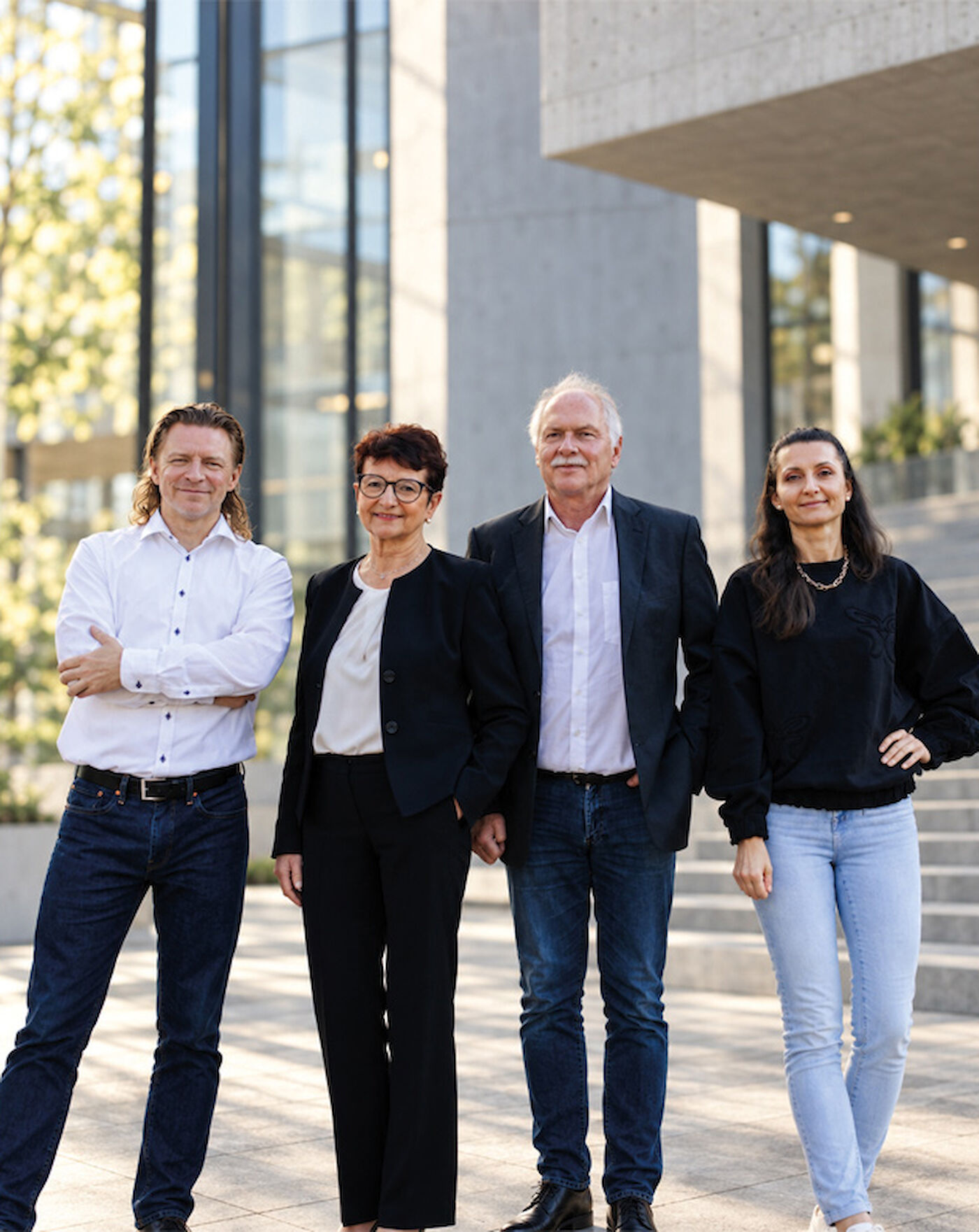
Managing Director Daniel Fierus-Beyer, Marita Beyer, PQ Plus company founder Lutz Beyer, and Managing Director Anna Beyer (from left to right) (Source: PQ Plus)
2015: The Move Toward an Independent Brand
From an early stage, the company also approached its sales activities in a systematic manner. It specifically targeted energy-intensive industries, particular geographic regions, and businesses of specific sizes. "Lutz would sit down shortly after eight in the morning, spend the entire morning making calls, and then continue right after lunch," recalls Daniel Fierus-Beyer. At the same time, the company built up a technical team focused on consulting and developing solution concepts; "power quality" emerged as a key area of expertise.
2015 marked a decisive turning point: in October, the family founded PQ Plus GmbH, making a firm commitment to establish its own brand and product portfolio for the German and European markets. Building on years of experience in measurement technology, energy management, and power quality, the company gradually evolved into an independent manufacturer and technology provider.
Today, PQ Plus is responsible for development, product management, application and software expertise, consulting, and the shaping of its product portfolio. As is common among industrial firms, the company collaborates with specialized technology and manufacturing partners. However, product strategy, application expertise, and a customer-centric focus are all centralized at PQ Plus—increasingly extending to the delivery of complete system solutions.
Robust, precise, and practical
From the outset, the product strategy has focused on professional, high-performance, and cost-effective measurement technology for demanding applications. Particularly within the energy sector and local distribution substations, PQ Plus identified a gap early on: there was a need for power quality measurement solutions that could be deployed economically on a large scale and across a wide geographic area.
Robustness plays a central role in this. "Installing a device outdoors in the Bavarian Forest at minus 25 degrees Celsius presents a completely different set of conditions than installing one in the basement of an industrial building," explains L. Beyer, describing the requirements. Consequently, the company incorporated CAT IV-rated designs and built-in structural margins from an early stage.
PQ Plus also addresses emerging requirements proactively—for instance, by developing measurement solutions for DC grids. For L. Beyer, it is crucial not to view developments in isolation: "Wherever electricity flows, it is important to understand exactly what is happening, both quantitatively and qualitatively."
According to Managing Director D. Fierus-Beyer, ease of use is equally important: "We wanted to create intuitive devices for electricians—featuring simple software and a user interface that doesn't require complex, fiddly operations." The technology is designed to provide the user with reliable information as quickly as possible.
Today, the company’s portfolio is guided by the principle: "Measure – Monitor – Store – Analyze." It includes universal measuring instruments, power quality analyzers, energy meters, current transformers, software, and accessories. Key areas of focus include power quality monitoring in accordance with EN 50160, RCM (residual current monitoring) and differential current monitoring, consumption and power measurement, MID-compliant metering, and the sub-metering of energy quantities (third-party quantity segregation).
The offering is complemented by consulting, concept development, commissioning, and training services. "We are able to serve various stakeholder groups and meet diverse requirements with a single measuring device," explains D. Fierus-Beyer. Energy managers require consumption data, maintenance personnel need information on power quality and disturbances, and service and maintenance technicians benefit from continuous residual current monitoring.
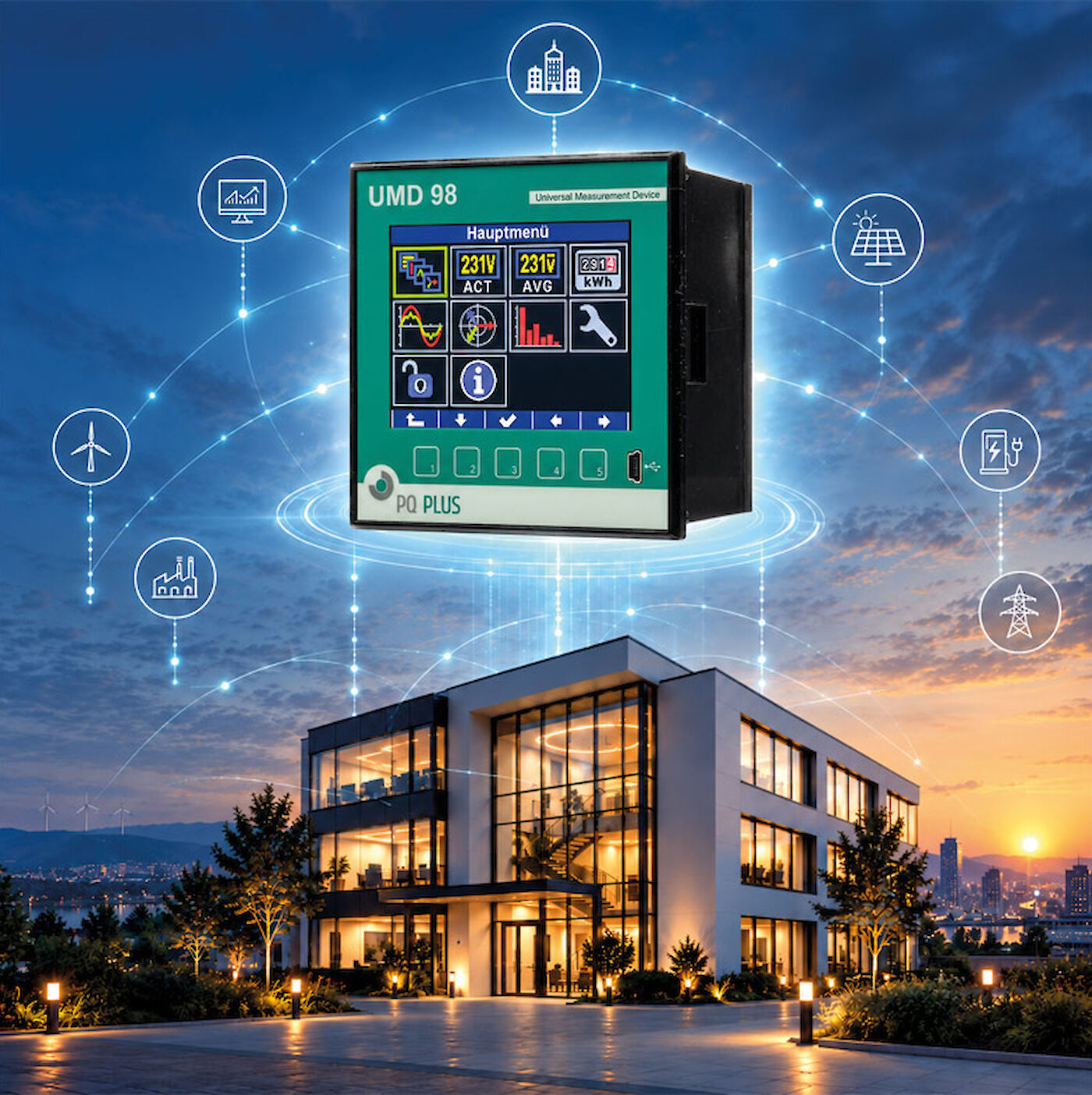
The high-performance panel-mount measuring device UMD98 is designed for monitoring current, voltage, and power quality in 3- and 4-wire networks. (Source: PQ Plus)
From Measured Value to Automated Analysis
Beyond hardware, software is increasingly taking center stage. PQ Plus views energy measurement technology as a comprehensive system encompassing data acquisition, transmission, storage, and analysis. The configuration and analysis software, Envis, supports tasks such as the analysis of power quality data in accordance with the EN 50160 standard. Meanwhile, the energy management software EnvisWeb handles data evaluation, visualization, alerting, and the generation of automated reports.
PQ Plus is intentionally expanding this area of its business. Key strategic focus areas include automated power quality analysis, anomaly detection, alerting, system integration, and—looking ahead—predictive maintenance. "Our goal goes beyond simply generating measured values; we aim to help our customers translate data into concrete decisions and actions," explains D. Fierus-Beyer, describing the company’s strategic direction.
At the same time, PQ Plus prioritizes modular, scalable architectures that integrate easily into existing control and IT systems. "Users can host the solution themselves. It is the customers' own data, which ensures their strategic independence," says D. Fierus-Beyer. As connectivity grows, information security becomes increasingly critical; PQ Plus is certified according to the ISO/IEC 27001 standard.
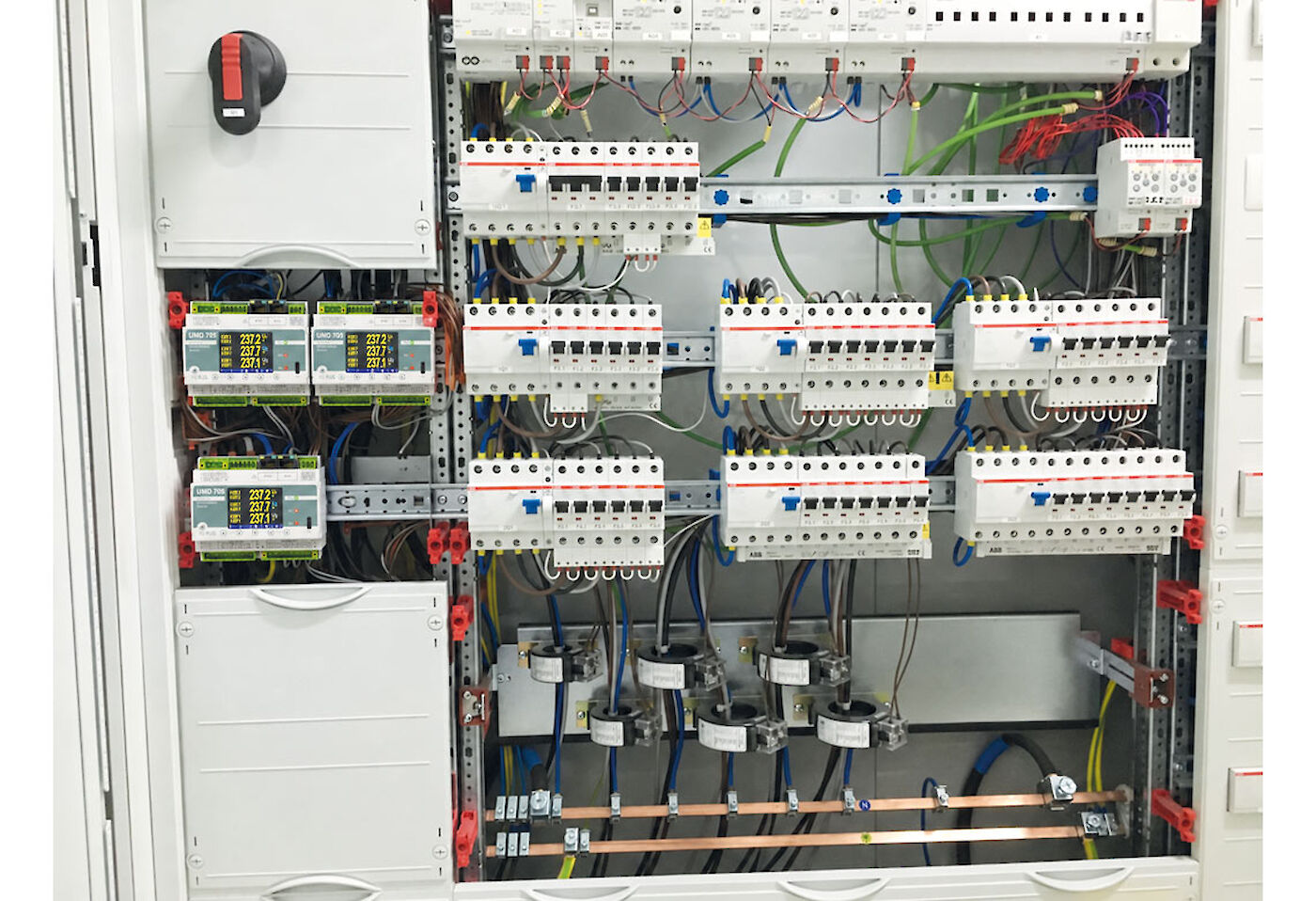
The UMD 705 is a compact power quality analyzer with a data logger, designed for mounting on a DIN rail – shown here on the left, in use within a cable distribution unit. (Source: PQ Plus)
Digital Distribution Grids as a Driver of Growth
The energy sector has emerged as a key area for growth. "We have gained a large number of municipal utilities as clients," reports D. Fierus-Beyer. Decentralized energy generators, storage systems, charging infrastructure, and other power-electronic loads are increasing the dynamic complexity within low- and medium-voltage grids. Consequently, what was once sporadic, point-in-time measurement technology is evolving into an infrastructure for continuous grid-state assessment.
"A portable measurement kit only captures what happens during a brief deployment. Once the technician leaves, the fault often reappears," explains L. Beyer, highlighting the issue. In contrast, permanently installed measurement technology provides transparency regarding power quality, load flows, and bottlenecks. For him, the conclusion is clear: "The digitalization of distribution grids is becoming an indispensable bridging technology."
As digitalization has progressed, utility providers have increasingly sought comprehensive, end-to-end solutions—encompassing everything from measurement hardware and data transmission to analysis and grid-state assessment. "Demand among utility providers for complete solutions has grown," recalls D. Fierus-Beyer. It was in this context that the partnership with GridCal began—marking another step in the company’s evolution from a manufacturer of energy and grid measurement equipment to a system and solutions partner for digital distribution grids.
A current example is the implementation of Section 14a of the Energy Industry Act (EnWG) and Section 9 of the Renewable Energy Sources Act (EEG). In collaboration with GridCal, PQ Plus integrates measurement technology located in local distribution substations with grid-state assessment and congestion management. By combining static grid parameters with dynamic measurement data, the system enables the evaluation of grid conditions and supports the preparation of operational control decisions. The VDE-FNN recommendation demonstrates that, in radial distribution networks, feeder-specific measurements at the substation level can reduce the required proportion of intelligent metering systems (iMSys) configured for TAF-10 data transmission—for instance, from 70% to 15%. Based on this, PQ Plus estimates that the number of chargeable TAF-10 data transmissions could be reduced by up to 75%. "This example clearly shows that traditional metering technology is increasingly evolving into an infrastructure for grid transparency, the determination of grid status, and decision-making regarding grid control," adds D. Fierus-Beyer.
Two Generations, One Shared Direction
Today, PQ Plus is shaped by two generations of entrepreneurs working in tandem. Lutz and Marita Beyer bring extensive experience in the market, its applications, and general business management; as CFO, Marita Beyer oversees the company’s strategic financial direction. Representing the next generation, Anna Beyer and Daniel Fierus-Beyer play a pivotal role in driving the company’s further development and scaling. The goal is to expand professional structures while preserving the short decision-making paths and personal touch characteristic of a family-owned business.
Anna Beyer focuses primarily on sales, customer orientation, and market development. One example of this is the series of roundtables for energy utility providers, which she initiated during the COVID-19 pandemic. "We traveled to various regions, invited municipal utilities and grid operators, and sparked genuine, substantive discussions," says Anna Beyer. These evolved into user meetings where customers present their own projects. "It’s wonderful to see a municipal utility representative take the stage to explain why they chose our solution—at that point, we’re essentially just observers," she notes with enthusiasm.
Daniel Fierus-Beyer’s areas of focus include finance, organization, strategy, and corporate development. Together with the leadership team, he is driving structural expansion, digitalization, and professionalization. A broader middle-management layer has been established, covering technical operations, sales, finance, order processing, and logistics. Furthermore, strengthening the brand and maintaining a visible presence within the industry remain key components of the company’s market development strategy.
Together, both generations are steering the next phase of the company’s evolution: transitioning from a successful family-owned business into a scalable manufacturer and system provider with highly professionalized structures—all while maintaining the close customer relationships and agile decision-making processes that define a family-run enterprise.
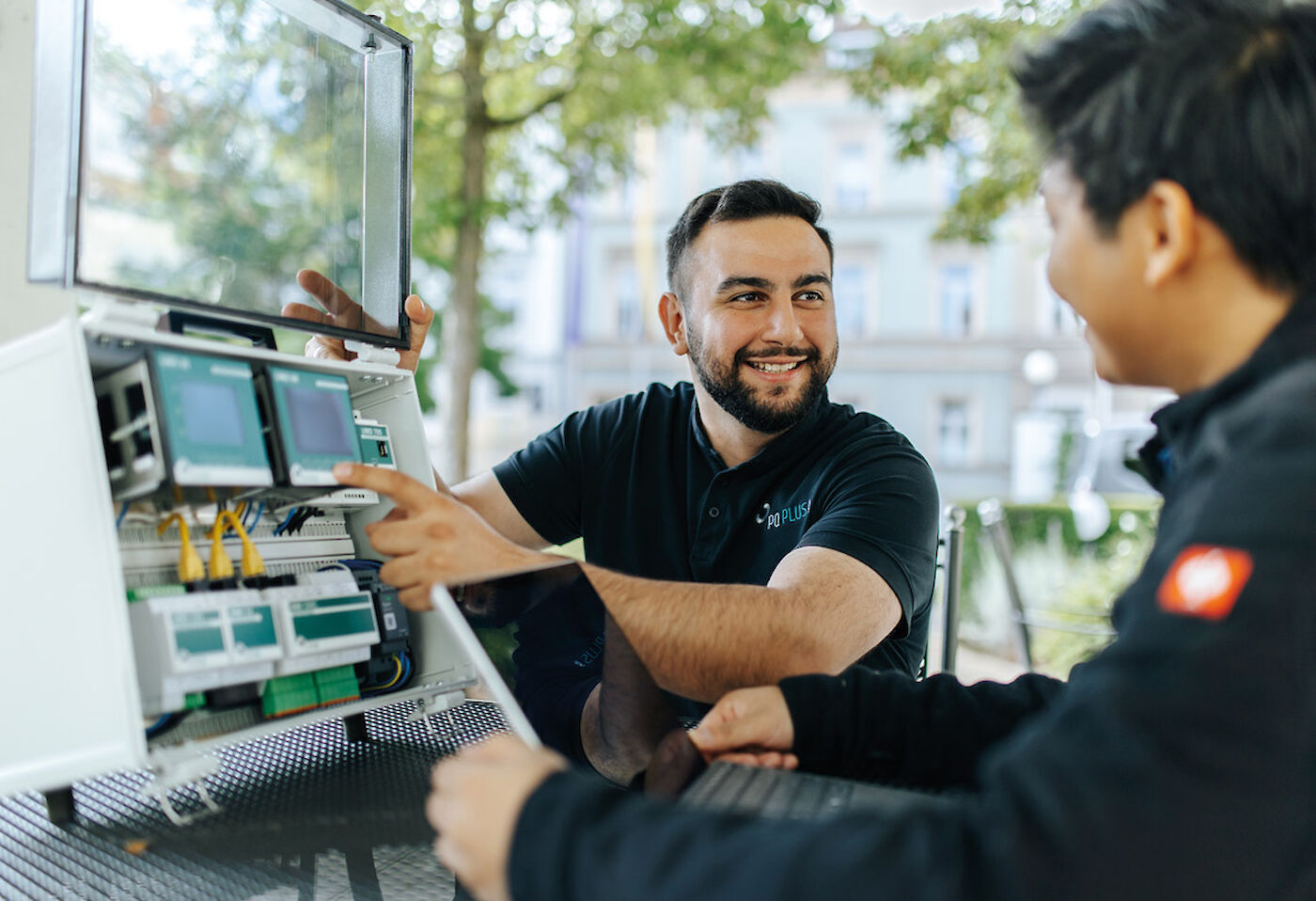
In addition to measuring instruments and energy management software, PQ Plus’s service portfolio includes consulting, concept development, commissioning, and training. (Source: PQ Plus)
Growth with a Long-Term Perspective
PQ Plus now employs 27 people and has grown organically. The company has consistently reinvested its earnings into personnel, development, inventory, digitalization, and market expansion. "PQ Plus has grown organically and remains on a sound financial footing," emphasizes CFO M. Beyer. "This long-term focus strengthens the entrepreneurial independence of our family-owned business." The managing partner adds: "In 2026, PQ Plus was once again awarded the CrefoZert—a creditworthiness certificate from Creditreform."
A new administrative building, currently under construction, will provide additional capacity, including extra warehouse space, training rooms, and technical work and application areas. Storage capacity is set to increase by up to 70%. This new facility forms the infrastructural foundation for the company’s next stage of development. At the same time, PQ Plus is investing in R&D expertise, software and automation, information security, sustainable corporate structures, additional staff, and a broader leadership team.
Beyond municipal utilities, the company’s focus extends to hospitals, data centers, public facilities, industrial plants, and decentralized power generation systems. With an average growth rate of 10% to 15%, PQ Plus aims to evolve from a successful manufacturer of energy and grid measurement technology into a leading system and solutions partner for energy metering, power quality, and digital distribution grids. Throughout this process, the company intends to preserve the core qualities that have defined it: a close relationship with customers, deep application expertise, streamlined internal processes, and a readiness to embrace new approaches early on. As D. Fierus-Beyer puts it: "We always strive to be a little different—in our technology, our development, and how we present ourselves in the market."

The EnVisWeb energy management system allows for the monitoring of all consumption data in accordance with ISO 50001, as well as the generation of utility cost statements at the touch of a button. (Source: PQ Plus)
