Much earlier than planned, Redinet Burgenland GmbH is digitizing all 131 of its local distribution substations using GridCal—while also incorporating the medium-voltage level.
The adoption of Section 14a of the Energy Industry Act (EnWG) likely sparked little immediate enthusiasm among grid operators—and Thilo Schlesiger, team leader for the electricity division at Redinet Burgenland in Zeitz, was initially quite skeptical himself. Yet, he soon recognized the opportunities it presented: "With these new requirements, the transparency in the low-voltage grid—something we technical grid operators have long and urgently desired—has now become mandatory." Ultimately, Section 14a EnWG served as a catalyst for digitalization in Zeitz: budget was promptly allocated for grid monitoring, and Thilo Schlesiger had a clear vision for how to put it to effective use. "We have a highly meshed low-voltage grid here that is in excellent condition. The number of applications for electric vehicles and heat pumps remains limited, so we don’t currently need to worry about bottlenecks. However, there is a significant increase in the installation of photovoltaic systems, which could potentially lead to issues with voltage stability in the low-voltage grid," explains the grid manager.
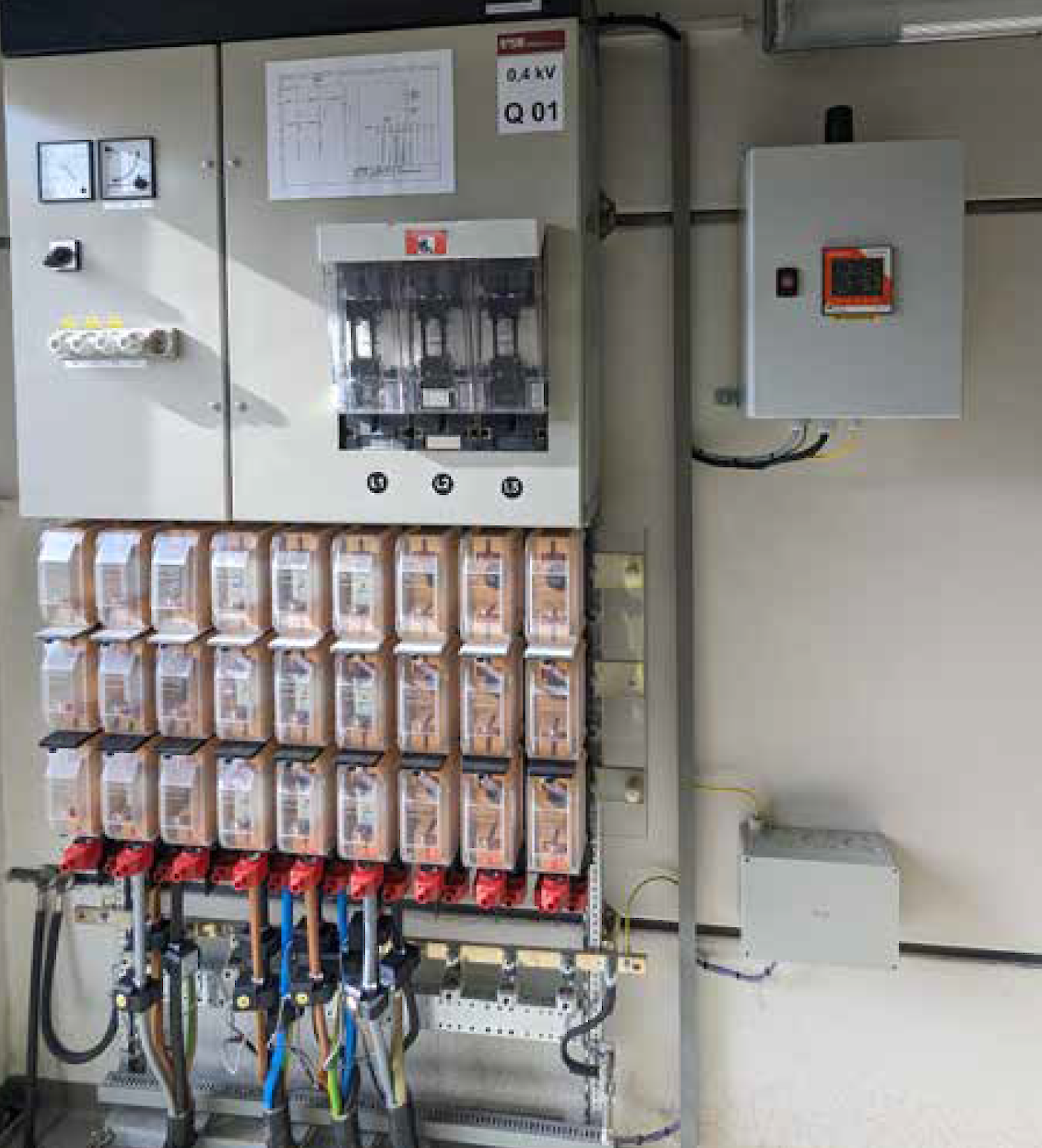
Quickly installed, the GridCal node (top right) enables real-time monitoring of the low-voltage grid in Zeitz.
(Photo: Redinet Burgenland GmbH)
Live Grid Monitoring in Record Time
Power quality measurements were therefore at the very top of the wish list. During preliminary discussions with the provider PQ Plus, the team from Zeitz learned about a system solution for the digitalization of distribution grids developed by partner company GridCal. The Krefeld-based technology provider offers a tool called the "GridCal Node," which captures real-time, feeder-specific measurement data, processes it locally, and makes it immediately available for grid analysis—right at the secondary substation. This approach was an instant success. "We don’t have a particularly extensive IT infrastructure. With this technology, we know exactly what is happening in individual grid sections at any given moment—and we can analyze how changes in load or power feed-in affect those specific sections," says a pleased Thilo Schlesiger. He demonstrates the monitoring system for a low-voltage sub-grid that includes several PV installations. On the screen, we can watch in real time how power flows, equipment utilization, and voltage levels shift as sunlight intensity changes. Further temporal and spatial analyses for the grid section in question can be activated at the touch of a button. To provide a comprehensive overview of the entire grid area, relevant data is consolidated within the "GridCal Operator" dashboard—a service currently hosted for Redinet by GridCal GmbH. "The GridCal Operator can be deployed either on-premises within the grid operator’s own IT infrastructure or as a hosted service. Redinet is currently using the hosted version, though it can always be migrated to the operator’s own system environment at a later stage," adds Philipp Huppertz, Managing Director of GridCal. In early 2024, the parties agreed on a suitable five-year financing and rollout plan. However, it soon became apparent that the project could be completed much faster than expected. "By 2027, we will have equipped all 131 stations in the Zeitz concession area with the GridCal system," reports Thilo Schlesiger—a year ahead of schedule, with a team of three technicians handling the installation alongside their day-to-day responsibilities.
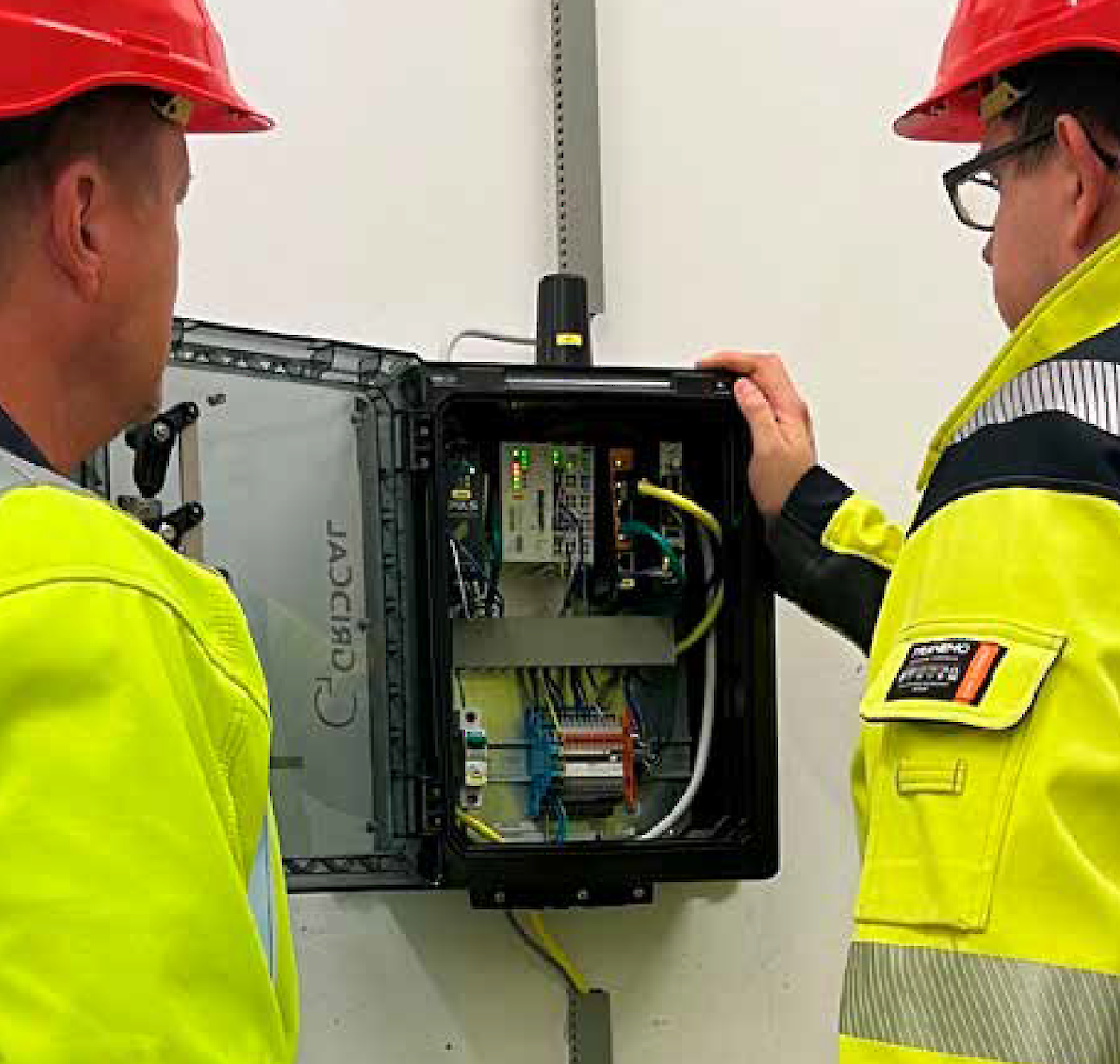
The medium-voltage switchgear units in the switch house were successfully integrated.
(Photo: Redinet Burgenland GmbH)
Incorporating Medium Voltage
Thilo Schlesiger, however, did not want to rest on these successes—he turned his focus to the medium-voltage level. "Voltage regulation and power flows in the low-voltage grid also depend on the operating conditions of the upstream medium-voltage network," he explains. Consequently, achieving true transparency in the low-voltage grid requires insight into the situation beyond the local distribution networks. "In my view, current legal requirements regarding feed-in and congestion management—as well as some solutions currently on the market—fall short in this regard," says Schlesiger. Redinet does, in fact, own a medium-voltage switching station within its grid area. "From a technical standpoint, the GridCal nodes can easily collect and analyze data here, too," says Philipp Huppertz. However, the operational framework in Zeitz is complex: the management of grid operations has been contractually delegated to the upstream grid operator, MITNETZ STROM, and is handled via their control center. The installed protection and control technology is therefore integrated into MITNETZ STROM’s security architecture—placing it beyond Redinet’s direct access. Nevertheless, by working with technology providers, the team in Zeitz found a solution that enables real-time, feeder-specific monitoring of the medium-voltage lines. "We take the measurements from the analog sensors in the individual feeder bays, feed them into the UMD 96 EL unit from PQ Plus, convert them into digital data, and then pass them on to the GridCal nodes," explains Thilo Schlesiger. This is where the system’s "intelligence" resides—now also applied to the medium-voltage level. It works, and it pays off.
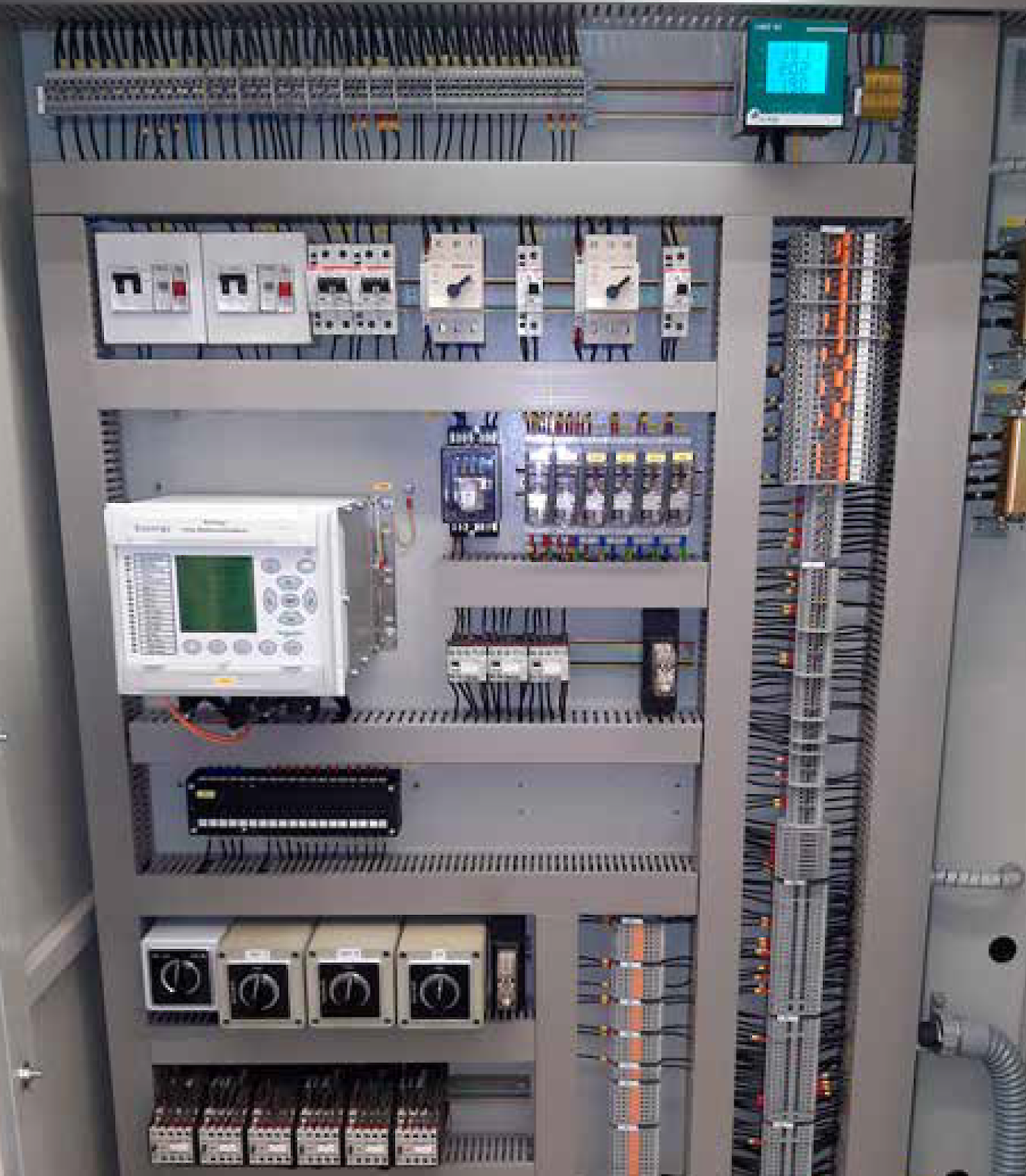
The UMD 96 EL from PQ Plus transmits analog measurement data from the medium-voltage switchgear panels to the GridCal node.
(Photo: Redinet Burgenland GmbH)
Added Value in Daily Operations
Real-time insight across both voltage levels is already helping to accelerate and improve numerous grid operation processes. For instance, special switching configurations required during construction or maintenance work can now be planned and monitored much more efficiently than before, explains Thilo Schlesiger, citing a recent example from a medium-voltage switching station: "As a grid operator, we do not own our own substation. Our upstream grid operator adjusts the transformer tap settings at the substation to maintain voltage levels. When we began our measurements, we received alerts indicating a tendency for voltage levels in our downstream low-voltage feeders—located at local distribution substations—to exceed defined limits. We were able to resolve this quickly by adjusting the tap setting on the local distribution transformer. As a result, the feeders—which host a large number of PV (photovoltaic) installations—now remain within the required voltage range, reducing the risk of PV inverters shutting down due to voltage issues." Overall, he concludes, this provides a significant reduction in the daily operational burden. Regarding control measures under Section 14a of the Energy Industry Act (EnWG), the new monitoring system allows the Zeitz-based grid operator to approach the implementation steps with much greater confidence. "We currently have no limit violations, and we can now substantiate this with solid data," says Schlesiger. "Once grid status monitoring is fully rolled out, we will also integrate our existing smart metering systems into the 'GridCal' platform to support the operational control requirements mandated by Section 14a EnWG." For the time being, however, this remains a lower priority in Zeitz. To begin with, Thilo Schlesiger aims to make the data and analyses from GridCal available for grid calculation and planning, with the goal of ensuring the long-term future-readiness of the Zeitz distribution grid.
