As the deployment of decentralized generators and consumers increases, the demands placed on metering technology within power grids are rising—including for local grid substations (ESTW). UMD metering devices from PQ Plus are being deployed at both low- and medium-voltage levels. This not only creates grid transparency but also automatically supports system planning and grid operations. As the next step toward full grid digitalization, the substations are to be successively equipped with the Gridcal system solution. This is required for grid calculation and simulation; Gridcal also supports the control of control boxes in compliance with the requirements of Section 14a of the Energy Industry Act (EnWG).
Erlanger Stadtwerke AG (ESTW) supplies customers in Erlangen and the surrounding area with electricity, gas, water, and district heating, and operates the city bus service and public swimming pools. In this context, ESTW is active in all areas poised for major future changes. This applies particularly to the electricity supply within the city, where ESTW operates the 20 kV and 0.4 kV power grids. More than 70,000 customers are supplied via an electrical network spanning over 100 km. Four substations serve five medium-voltage supply areas. From these networks, around 450 local distribution substations feed electricity into the low-voltage grids.
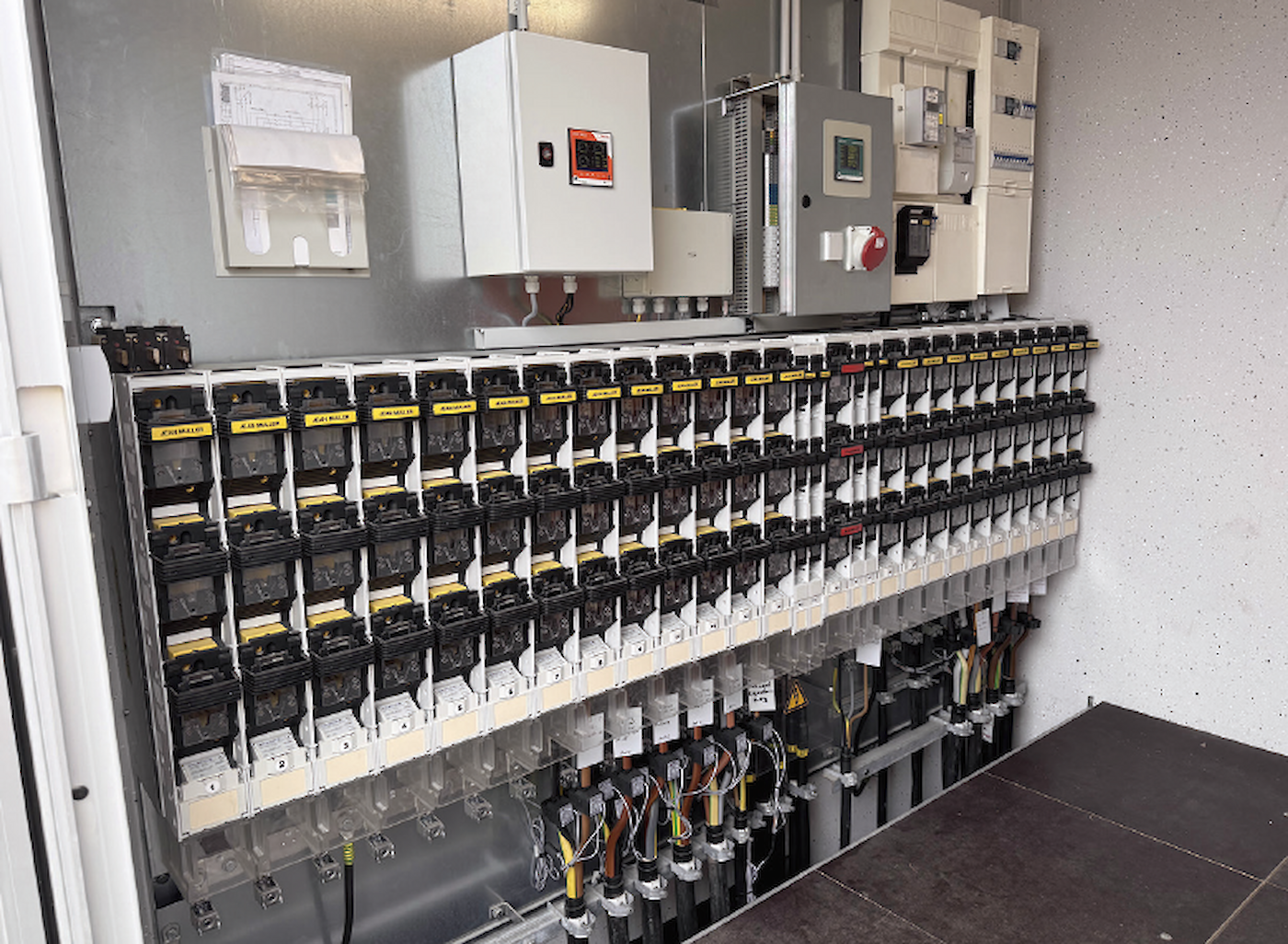
Integration of a GridCal system into an existing ESTW low-voltage distribution network
Image source: ESTW
In recent years, electricity consumption has not risen—mirroring trends in many urban grids—thanks to energy-saving measures. Nevertheless, regional consumption and load patterns have fluctuated, and solar power feed-in has increased drastically, particularly over the last five years. "For this reason, the maximum-demand indicators used at the time were no longer providing meaningful data. This prompted the upgrade of local distribution substations with digital metering technology and the implementation of partial remote data transmission to the control system," explains Dr. Carsten Böse, Head of Grid and Asset Services at ESTW. As part of this initiative, an entire low-voltage network—extending from the local distribution substation to the cable distribution cabinets—was digitized, and analyses were conducted in collaboration with Friedrich-Alexander-Universität Erlangen. To this day, the project serves as a pilot for the company in the ongoing development of its grid infrastructure and metering systems.
Growing Challenges
Until the beginning of this decade, according to the department head, increased loads on certain low-voltage cables occurred only sporadically, resulting in manageable limitations. "The expansion of PV systems and the integration of new loads—such as electric vehicles and heat pumps—have brought about changes in energy flow and associated voltage regulation effects, as well as in compliance with the voltage quality standards set by IEC 50160," reports Böse. Consequently, evaluating peak current values using drag indicators was no longer sufficient.
To address these challenges, ESTW has generally installed digital measuring devices in its power grid to monitor transformer loads. These devices are installed in the infeed panels of low-voltage distribution units. The utility employs PQ Plus devices: the UMD 98 model for standard local grid substations, and the UMD 913 for special-contract customer substations and stations where higher-order harmonics are anticipated. Special-contract customers require even more detailed measurement capabilities that go far beyond current standards and requirements; for instance, the UMD 913 is already capable of measuring supraharmonics in the 2–9 kHz range. "This positions Stadtwerke Erlangen well for the future," explains Böse. Currently, approximately two-thirds of the installed measuring devices support remote reading. Installation takes place in all new substations, as well as in existing ones—depending on their importance for supply reliability—or during retrofit projects. While Stadtwerke Erlangen has not pursued a grid-wide rollout of digitalization, areas with high PV penetration, mixed-use zones (combining industry, commerce, and residential housing), and similar locations have seen a higher level of digital metering deployment.
New collaboration between control technology, IT, and plant engineering
"Looking back at the early days, the switch from analog maximum-demand indicators to digital measuring devices might not seem like a major change; however, those initial steps were taken at a time when tablets were not yet available and laptops were a rarity," recalls Department Head Böse. Furthermore, the introduction of digital metering technology increased wiring complexity compared to the simple connections of earlier current meters, as it was now necessary to account for the phase relationship between currents and voltages. "The remote transmission of data from the measuring devices fostered a new collaboration between the control technology, IT, and plant engineering departments. At the same time, data storage and analysis processes had to be reorganized to handle the vastly increased volume of available information," notes Böse.
Using these recorded data, ESTW now conducts load-profile-based analyses and grid calculations in areas where this is deemed necessary. "In some parts of the grid, measurements from maximum-demand indicators made it impossible to determine whether a recorded value was caused by consumers or generators. The new metering technology allows us to clearly identify the source," the ESTW employee reports. The load profiles also reveal whether peak values resulted from actual load trends or merely from a temporary change in grid topology—such as switching operations during fault conditions or maintenance work.
According to Böse, this data allows for much more precise derivation of measures such as grid expansions. "During operation, this information also provides valuable insights for analyzing voltage quality and allows for initial conclusions regarding underlying issues—such as flicker phenomena. Furthermore, it indicates whether an incident was an isolated event or a recurring one. In the case of recurring events, this makes it possible to narrow down causes more quickly and specifically target sources of faults," Böse adds, highlighting the benefits of the new measurement concept.
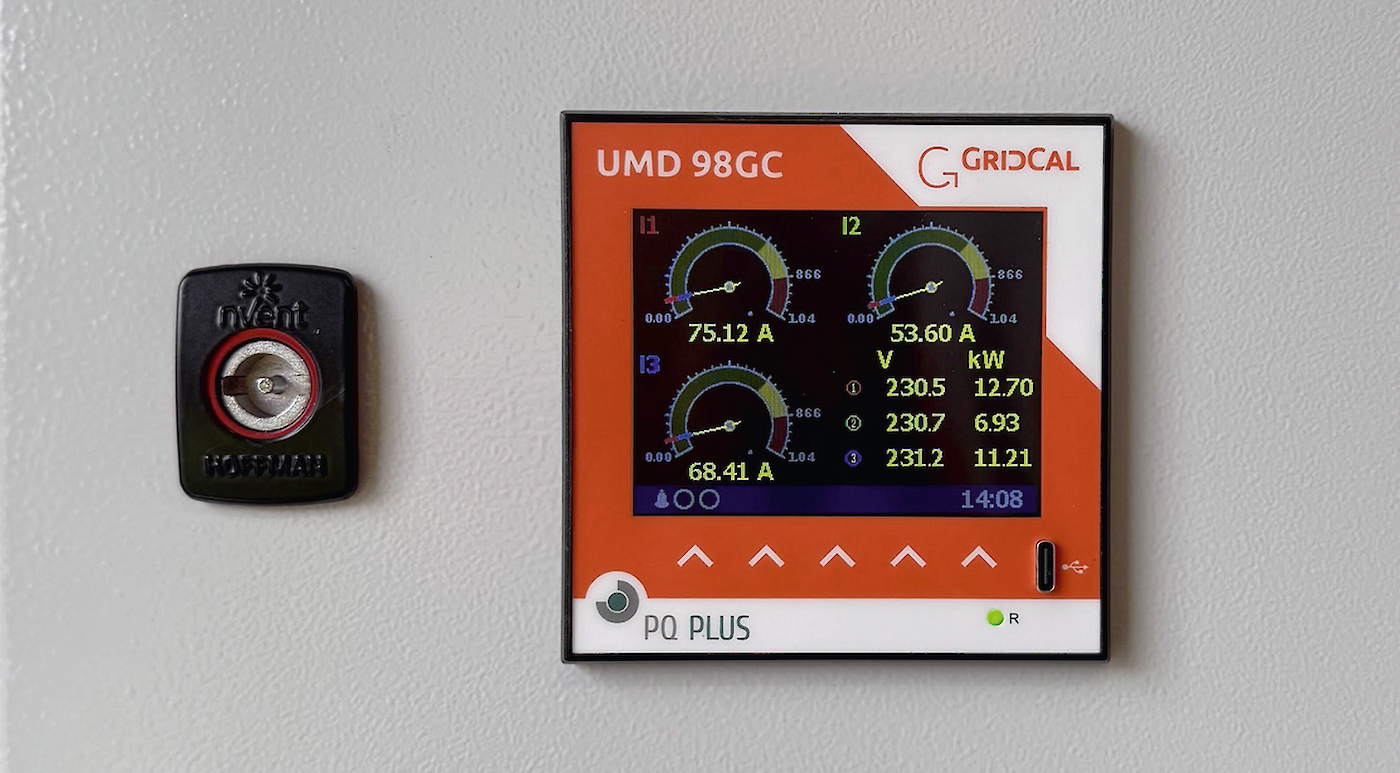
Prefabricated control cabinet for the plug-and-play integration of the GridCal system. In addition to the power quality meter, it houses the communication units and the decentralized unit for data processing at the local distribution substation.
Image source: ESTW
Monitoring Low-Voltage Grids
Now that large sections of the grid are being monitored for transformer load, the next step is to monitor the low-voltage grids. To achieve this, data from the outgoing feeders must be captured in addition to the information obtained from transformer measurements. This represents a tenfold to twentyfold increase in the volume of available data. Furthermore, state estimation is required to gain insight into conditions at the far ends of the low-voltage lines. This is essential for complying with the requirements of Section 14a of the Energy Industry Act (EnWG), and the information is also needed to identify grid vulnerabilities as equipment utilization rises.
This forms the core of "Gridcal," the distribution grid digitalization system solution from PQ Plus. Gridcal incorporates PQ Plus’s modular measurement technology—comprising UMD 98LB measuring devices and the MMI 12 human-machine interface for comprehensive power quality monitoring at the transformer—alongside the measurement of all relevant load parameters at the low-voltage outgoing feeders. "Gridcal functions like a car’s cockpit and onboard computer. During operation, you receive only the most critical information—such as 'low oil level' or 'check tire pressure'—based on deviations from defined limits," explains Böse, describing the solution implemented at ESTW. However, for fault analysis, an expert mode is available to display events in greater detail. "This type of application is important for focusing on core tasks, but also for ensuring a timely response," reports the department head.
According to PQ Plus, the Gridcal system’s design allows for flexible and easy retrofitting into existing secondary substations; furthermore, it can be directly integrated into new substations by the system installer. Thanks to small-signal transformer technology featuring a 333 mV output signal, the metering equipment can be installed while the system is live. The company emphasizes that the MMI plug-in technology developed by PQ Plus ensures error-free wiring connections for the transformers. Commissioning the technology thus eliminates connection errors that could otherwise necessitate repeated modifications to the substations. PQ Plus estimates that fully equipping a station with the metering technology and the Gridcal system solution takes a team of two technicians approximately half a day.
Demand-Driven Rollout of Gridcal
The rollout of Gridcal in Erlangen is intended to proceed in stages and, ideally, be driven by actual demand—though that demand is rising. "Against the backdrop of the Energy Industry Act (EnWG), we anticipate a widespread rollout in the coming years," explains Böse. Costs and installation capacities play a crucial role in implementation. "We are currently in a pilot phase with Gridcal, which allows us to assess the value of the calculations when only limited measurement data is available. This helps us determine, for instance, whether incorporating meter readings will be necessary," says grid expert Böse. In his view, decentralized solutions offer a significant advantage here, thanks to a simple basic installation that requires no complex backend control system and allows for easy retrofitting.
Overall, the department head praises the excellent collaboration with PQ Plus. Their technical field and office teams provide on-site support whenever questions or challenges arise, and the company can consistently rely on the high level of technical expertise possessed by PQ Plus staff.