The integration of heat pumps, charging infrastructure, battery storage systems, and distributed energy resources is making power flows in low-voltage grids more dynamic. Consequently, grid operators need a more precise understanding of what is actually occurring within their networks—and the ability to respond effectively when bottlenecks arise. To address this, PQ Plus and GridCal combine grid measurement technology—deployed at local distribution substations—with digital grid-state assessment and congestion management. The objective is a scalable system solution that leverages real-world measurement data to provide grid transparency, thereby establishing a foundation for targeted control decisions.
The roots of PQ Plus GmbH go back nearly four decades. Drawing on extensive experience in engineering, the market, and the application of electrical measurement, energy, and grid technology, the Beyer family developed what is now PQ Plus—a company with its own brand and product portfolio. Today, PQ Plus develops and manufactures its own energy and grid measurement technology, integrating it into comprehensive system solutions for the digitalization of electrical distribution grids. The energy sector, in particular, has emerged as a key growth area. "We have gained a great many municipal utilities as clients," reports Managing Director Daniel Fierus-Beyer. However, the ongoing process of digitalization has also shifted their requirements. There is no longer just a demand for individual measuring devices; instead, the need is for end-to-end solutions—covering everything from data acquisition, transmission, and analysis to the assessment of grid status. "Demand for complete, integrated solutions grew among utility providers," recalls Fierus-Beyer. Consequently, PQ Plus has consistently expanded its system expertise. The collaboration with GridCal complements the company’s existing energy and grid measurement technology, as well as its application and software capabilities, by adding functions for determining grid status and managing bottlenecks. This creates a seamless solution that spans from the collection of measured values to the preparation of control decisions. For Fierus-Beyer, the direction is clear: "The digitalization of distribution grids is becoming an indispensable bridge technology."
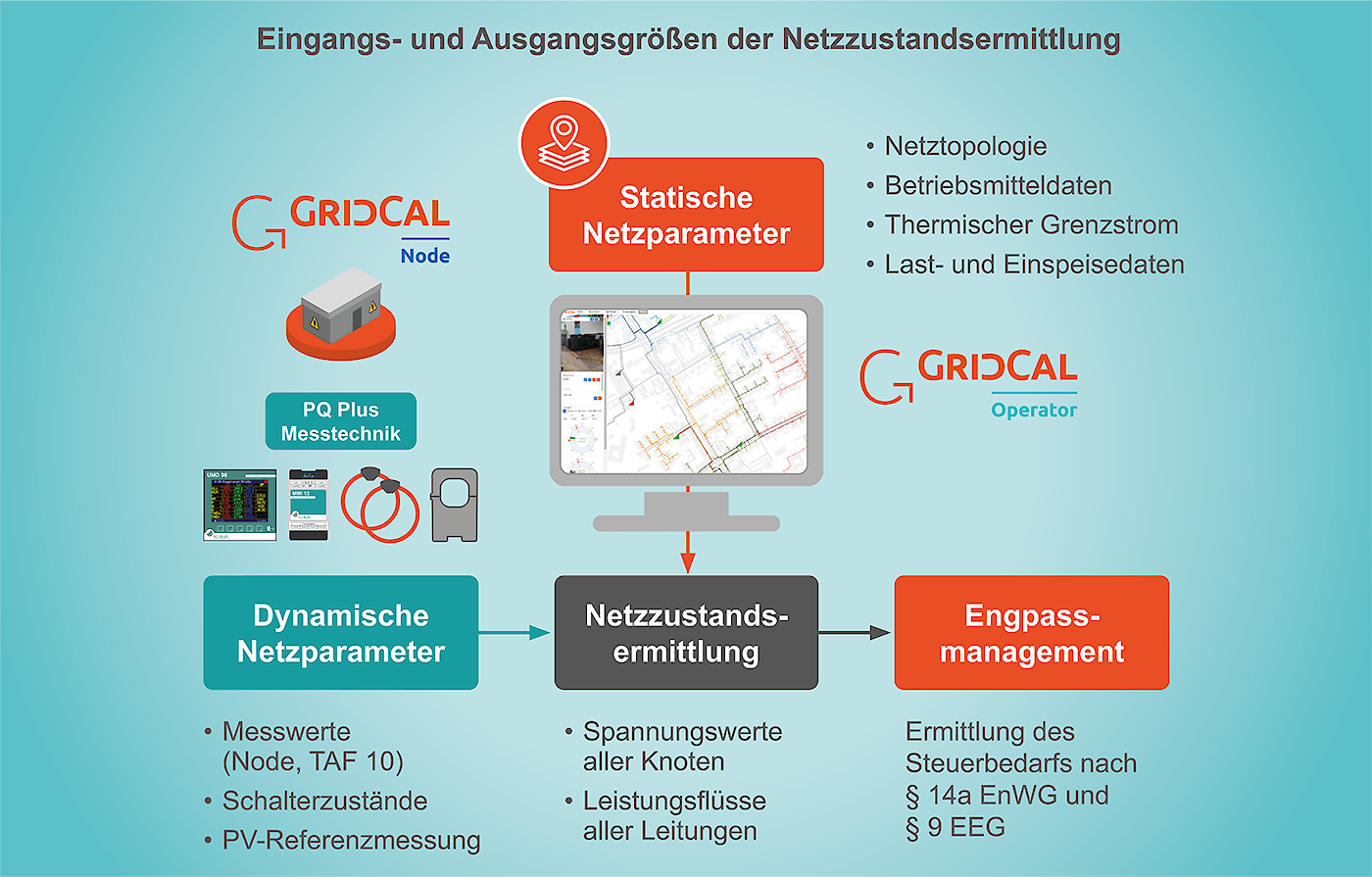
Figure 1. Input and output variables for grid state estimation
Section 14a introduces new requirements for the low-voltage grid
The context is well known: electromobility, heat pumps, battery storage systems, and other controllable loads are placing additional power demands on low-voltage grids. At the same time, the feed-in of electricity from photovoltaic systems and other decentralized generators is increasing. What were once relatively predictable load flows are evolving into an increasingly dynamic interplay of power consumption and feed-in. Under Section 14a of the Energy Industry Act (EnWG), grid operators are empowered to intervene and control specific loads in the event of potential grid bottlenecks. However, effective and targeted control requires an accurate understanding of the state of the affected grid segment—which is precisely where grid state estimation comes into play. The objective is to continuously assess the actual state of the low-voltage grid. Based on the specifications underlying the PQ-Plus/GridCal concept, this process utilizes data measured at one-minute intervals. The focus is primarily on three types of bottlenecks: undervoltage or overvoltage conditions outside the permitted voltage range, power overloads at local distribution substations, and the exceeding of the continuous current-carrying capacity of power lines. This approach ensures that both power quality and the thermal loading of grid equipment are monitored.
More grid-level measurement, less TAF 10
A key question is how many data points from smart metering systems at the end-customer level are actually required to reliably determine the state of the grid. This is precisely where the value of additional measurement technology—installed directly at secondary substations—becomes apparent. Through "Tariff Application Case 10" (TAF 10), grid-state-related data can be supplied via smart metering systems. However, the more reliable information that is already available directly from the grid infrastructure, the lower the additional need for such TAF 10 data becomes. A recommendation from the VDE-FNN, cited in the PQ Plus/GridCal brochure, illustrates the scale of this impact. In a radial grid, a TAF 10 coverage rate of 70% is assumed if no measurements are taken at the secondary substation. If a transformer-side aggregate measurement is in place, this figure drops to 30%; if the low-voltage feeders are also monitored, it falls to 15%. A similar effect is observed in meshed grids. For a meshed grid with a single transformer, the requirement—shown in the table as 40% without substation-level measurement—decreases to 10% with transformer-side aggregate measurement, and further to 5% when low-voltage feeders are also monitored. For meshed grids with two or more transformers, the requirement is 25% without substation-level measurement, dropping to 0% when transformer-side aggregate or feeder measurements are implemented. PQ Plus and GridCal estimate that this can reduce the transmission of fee-based TAF 10 data sets by up to 75% across the grid configurations analyzed. The strategy, therefore, is not to collect as much data as possible from as many end-points as possible. Instead, the measurement infrastructure within the grid should be designed in such a way that an economically sensible number of high-quality measurement points provides sufficient transparency for determining the state of the grid. Fierus-Beyer summarizes this development as follows: “This example clearly shows that conventional measurement technology is increasingly evolving into an infrastructure for grid transparency, state estimation, and control decision-making.”
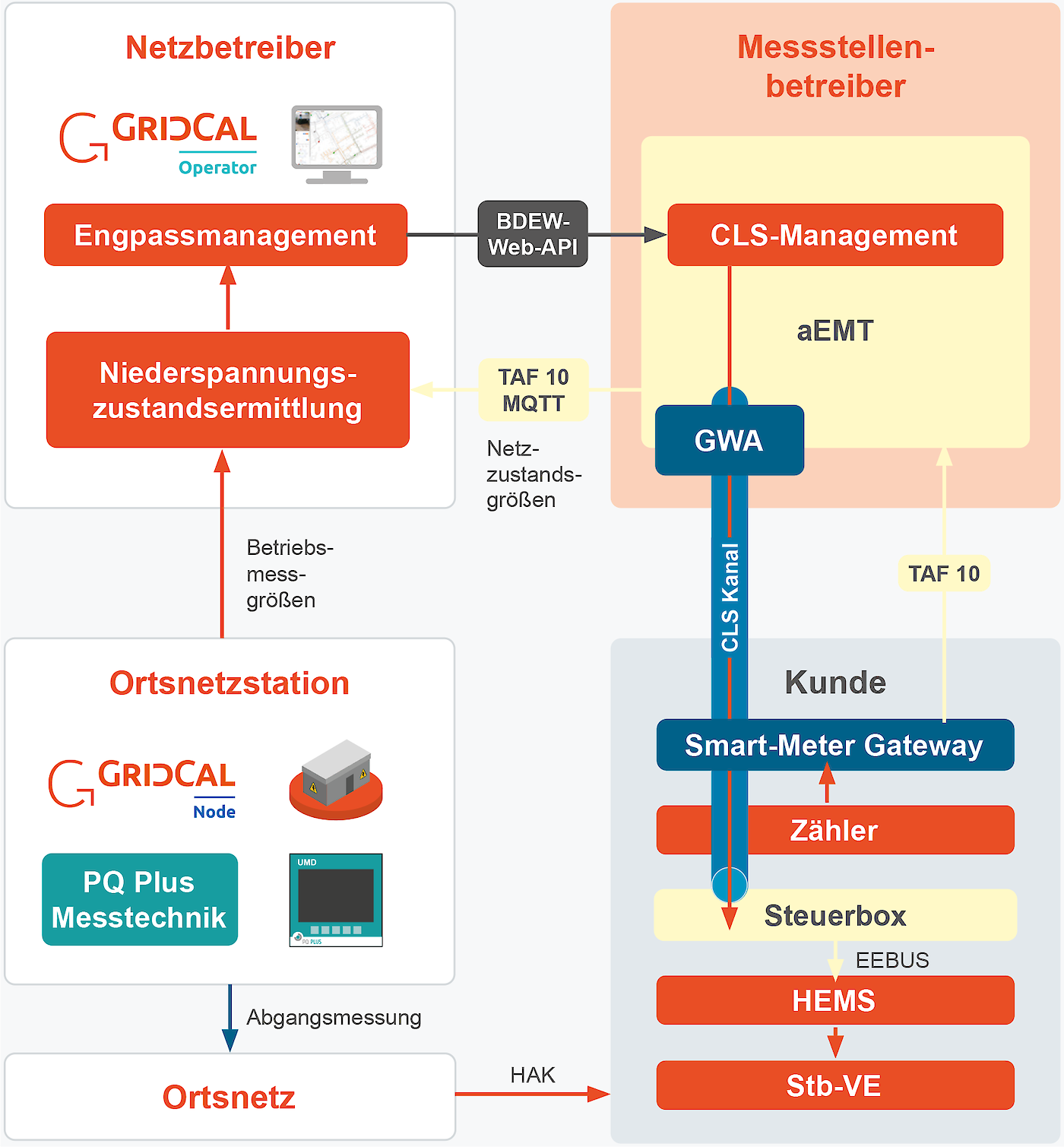
Figure 2. Grid state determination and control in detail
Combining Static and Dynamic Data
Measured values alone are insufficient for determining the state of a power grid; a digital representation of the grid is also required. The joint concept developed by PQ Plus and GridCal therefore integrates both static and dynamic grid parameters. Static parameters include grid topology, equipment data, thermal current limits, as well as load and feed-in data. Dynamic information is provided, among other sources, by PQ Plus measuring devices installed in local distribution substations. This can be supplemented by TAF-10 measurement data, switch status information, and, for instance, PV reference measurements. GridCal uses this information to calculate the state of the grid, including voltage levels at grid nodes and power flows across the lines. By combining the grid model with actual measured values, it is possible to identify whether a grid bottleneck is developing and where intervention is required. The system architecture shown in Figure 1 illustrates a clear sequence: PQ Plus measurement technology provides dynamic grid parameters, which are complemented by static grid parameters to complete the model. The grid state assessment then evaluates the current condition of the network, and the bottleneck management system determines the necessary control actions in accordance with Section 14a of the Energy Industry Act (EnWG) or Section 9 of the Renewable Energy Sources Act (EEG). This approach differs fundamentally from isolated, ad-hoc troubleshooting. "A mobile measurement kit only captures what happens during a brief deployment. Once the technician leaves, the fault may well recur," explains Lutz Beyer, General Manager at PQ Plus. In contrast, permanent measurement technology establishes a continuous data foundation.
From Grid Model to Control Command
The architecture shown in Figure 2 illustrates how grid state estimation and control can work together. In the local distribution substation, PQ Plus devices capture the relevant measured variables. The GridCal Node establishes the connection to the grid state estimation system. Within the GridCal Operator, operational data is linked with the grid model and processed for low-voltage state estimation and congestion management. If additional values from smart metering systems are required, TAF-10 data can be incorporated into the calculations. On the control side, a connection to the metering point operation is established. Through CLS (controllable local system) management, a smart meter gateway, and a control box, a control command can be transmitted all the way to the controllable consumer device. A Home Energy Management System (HEMS) can also be integrated into this chain. This transforms measurement technology into an end-to-end information chain: measuring, calculating the grid state, identifying congestion, determining the need for control, and triggering the necessary control command. For PQ Plus, it is essential that their role does not end with the hardware; the company is responsible for product management, application and software expertise, and the integration of its measurement technology into such comprehensive systems. GridCal contributes specialized grid calculation and congestion management capabilities. It is precisely this interplay of diverse areas of expertise that enables scalability for municipal utilities and regional energy providers.
Preventive vs. Grid-Oriented Dimming
The concept distinguishes between two fundamental control approaches. In "preventive dimming," the power output of a controllable load is reduced as a precautionary measure. According to PQ Plus and GridCal, this is limited to a maximum of two hours per controllable load per day. In this scenario, the control command is issued based on an anticipated grid congestion. The primary objective, however, is "grid-oriented dimming." Here, congestion is identified in real time—or based on current grid status data. A control command is triggered only when an assessment of the grid status confirms that such a situation exists. The advantage is clear: the more precisely the actual grid status is known, the more targeted the control measures can be. Instead of limiting power as a precaution, the grid operator can respond to the specific conditions within a given section of the grid. Consequently, the quality of the underlying measurement data takes on direct operational significance. Inaccurate or missing data can lead to unnecessary interventions—or, conversely, to a failure to detect grid congestion until it is too late.

Figure 3. The more reliable information already available directly from the grid, the lower the potential additional requirement for TAF-10 data.
Source: VDE FNN Recommendation, provision 2e, Jan. 2025, p. 18
Integrating § 14a EnWG and § 9 EEG
While § 14a of the Energy Industry Act (EnWG) focuses specifically on controllable consumption units, grid operators must simultaneously keep the feed-in side in view. This is precisely where § 9 of the Renewable Energy Sources Act (EEG) comes into play. Photovoltaic (PV) systems, battery storage, and other decentralized generation plants alter load flows, just as new consumption units do. Particularly in grid areas with high PV penetration, both high consumption loads and significant feed-in volumes can lead to bottlenecks. The system solution from PQ Plus and GridCal addresses both directions. Grid state analysis maps power flows and voltage conditions within the network; based on this, congestion management determines the necessary control measures in accordance with § 14a EnWG and § 9 EEG. Consequently, the local distribution substation is increasingly becoming a vital information hub for operational grid management. Metering technology no longer merely records energy consumption; it now provides data for evaluating the entire grid segment.
Open Systems and Data Sovereignty
As digitalization advances, the importance of system integration and data sovereignty continues to grow. PQ Plus pursues an open approach in this regard. "Users can host the solution themselves. It is the customers' own data, which ensures their strategic independence," explains Daniel Fierus-Beyer. Existing control and IT systems should be easy to integrate—a particularly important factor for municipal utilities that do not wish to completely replace their current infrastructure. Modular, scalable architectures allow for the initial digitalization of individual local distribution substations, with the infrastructure then being expanded incrementally. At the same time, automated analysis is becoming increasingly significant. Beyond the collection and provision of measured values, the automated derivation of relevant information and decision-making foundations from large volumes of data is becoming increasingly important for PQ Plus. This strategy encompasses power quality analysis, anomaly detection, alerting, and—looking ahead—predictive maintenance. "Our goal is not merely to generate measurements, but to support customers in translating data into concrete decisions and actions," says Fierus-Beyer.
Conclusion
The implementation of Section 14a of the Energy Industry Act (EnWG) serves as a prime example of how the role of electrical metering technology is evolving. For the digitalization of low-voltage grids, it is not enough simply to collect data points in as many locations as possible. What is crucial is to capture the right parameters at the appropriate locations, integrate them into a robust grid model, and automatically derive actionable information from them. Specifically, taking measurements at local distribution substations—and at their low-voltage feeders—offers a dual benefit: it enhances transparency regarding the actual state of the grid while simultaneously reducing the need for additional TAF-10 data points from smart metering systems. Consequently, traditional energy and grid metering technology is increasingly transforming into an infrastructure for grid state estimation and control. For Daniel Fierus-Beyer and Lutz Beyer, the core concept is relatively straightforward: "Wherever electricity flows, we should be interested in what is happening—both quantitatively and qualitatively." In a digitized distribution grid, this requirement is increasingly becoming a prerequisite for safe and economical grid operation.
